Above Ground Pool Maintenance - A Complete Guide


Article TLDR:
-
Above ground pools require the same core maintenance as in-ground pools but with a few key differences: smaller pumps, vinyl liners, and more exposure to heat all mean problems escalate faster.
-
Run the pump 8–12 hours per day. Skim and check water level daily. Brush, vacuum, and test chemistry weekly.
-
Key chemistry targets: free chlorine 1–3 ppm, pH 7.2–7.6, alkalinity 80–120 ppm, cyanuric acid 30–50 ppm.
-
Shock weekly during peak season, or any time the water looks off.
-
Filter maintenance depends on your filter type as sand, cartridge, and DE all have different schedules.
-
Close the pool properly at the end of the season. Skipping steps is one of the most common causes of a costly spring opening.
Above ground pools are easier to set up than in-ground pools, but the ongoing maintenance is essentially the same. The difference is that above ground pools tend to escalate problems faster — smaller pumps mean less filtration capacity, thinner vinyl liners are more sensitive to chemistry imbalances, and direct sun exposure burns through chlorine quickly. This guide covers everything you need to keep on top of it: equipment basics, cleaning routines, water chemistry, filter care, troubleshooting, and seasonal opening and closing.
Equipment Basics
If you're new to pool ownership, it helps to know what each component does before you start maintaining it.
Pump: The heart of the system. It pulls water through the skimmer, pushes it through the filter, and returns it to the pool through the return jet. Without adequate pump runtime, nothing else works properly.
Filter: Removes particles and debris from the water as it passes through. Above ground pools use one of three filter types — sand, cartridge, or diatomaceous earth (DE) — and each has a different maintenance routine covered in the filter section below.
Skimmer: The opening in the pool wall that draws water (and floating debris) into the pump. It has a removable basket that catches leaves and debris before they reach the pump.
Return jet: Where filtered water comes back into the pool. Angling it downward and to one side creates circulation that helps distribute chemicals and prevents dead spots where algae can form.
Liner: The vinyl lining that holds the water. Above ground pool liners are thinner than in-ground equivalents and more sensitive to both chemical imbalances and physical damage. Keep chemistry balanced and avoid sharp objects in or around the pool.
Daily and Weekly Tasks
Daily (5–10 minutes)
Run the pump. Run it for at least 8–12 hours per day. In hot weather or with heavy use, lean toward the higher end. A useful rule of thumb: your pump should turn over the entire pool volume at least once per day. If you don't know your pump's flow rate, check the label: it'll be listed in gallons per hour (GPH) or gallons per minute (GPM). Divide your pool volume by that number to see how many hours you need.
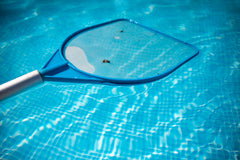
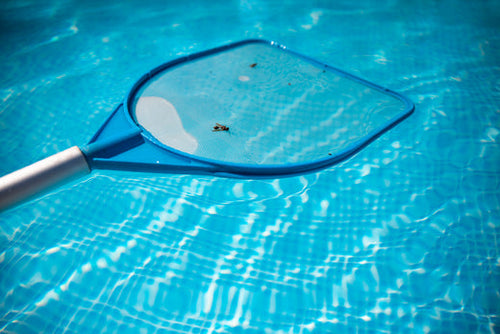
Skim the surface. Remove leaves, insects, and debris before they sink and start breaking down. Sunken organic matter raises phosphate levels, feeds algae, and puts more work load on your filter.
Check the water level. Water should sit at the midpoint of the skimmer opening. Too low and the pump pulls air, which can damage it. Too high and the skimmer can't draw in floating debris effectively. Top up with a hose if needed, or check for a leak if the level keeps dropping faster than evaporation would explain.
Empty the skimmer basket. A clogged skimmer basket restricts flow to the pump. This takes 30 seconds and prevents bigger problems.
Weekly (30–60 minutes)
Brush the walls and floor. Use a soft-bristle brush for vinyl liners. Brushing loosens algae before it takes hold, and pushes debris toward the drain or vacuum head. Work from the waterline down to the floor.
Vacuum. If your pool has a manual vacuum, run it across the floor after brushing. If you have an automatic cleaner, check that it's covering the full floor area. Vacuuming removes the debris that brushing dislodged.
Test and balance the water. See the water chemistry section below for the full rundown. At minimum, test free chlorine and pH weekly as these two have the biggest day-to-day impact on water quality.
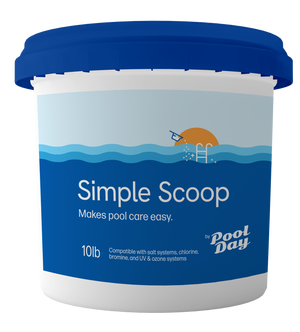
Shock the pool. During peak swimming season, a weekly shock is a good default unless you're using Simple Scoop alongside your regular sanitizer, in which case routine weekly shocking isn't necessary. Shock more often after heavy use, heavy rain, or if the water starts to look hazy or smell strongly of chlorine (that "pool smell" is actually a sign of depleted chlorine, not too much of it). Shocking breaks down chloramines and kills bacteria that regular chlorine levels might not catch.
Check and clean the pump basket. The pump has its own strainer basket separate from the skimmer basket. Clear it weekly to maintain good flow.
Water Chemistry
Balanced water chemistry is what keeps the pool safe, protects the liner, and makes every other maintenance task easier. Here are the routine parameters to monitor and the targets to aim for:
|
Parameter |
Ideal Range |
Why It Matters |
|
Free Chlorine |
1–3 ppm |
Primary sanitizer that kills bacteria and algae |
|
pH |
7.2–7.6 |
Affects chlorine effectiveness and bather comfort |
|
Total Alkalinity |
80–120 ppm |
Stabilizes pH and prevents swings |
|
Cyanuric Acid (CYA) |
30–50 ppm |
Protects chlorine from UV breakdown outdoors |
|
Calcium Hardness |
150–250 ppm |
Prevents liner damage and equipment corrosion |
Testing frequency: Test chlorine and pH at least twice a week during peak season. Test alkalinity, CYA, and calcium hardness monthly, or when troubleshooting a chemistry problem.
Test strips vs. liquid kits: Strips are good for routine chlorine and pH checks. For alkalinity, CYA, and calcium hardness, especially before making any significant adjustment, a liquid drop test kit gives a more accurate reading.
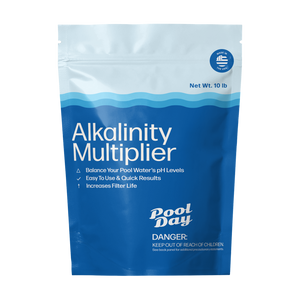
For more detail on any of these parameters, Pool Day's Water Wisdom guides cover each one in depth: Alkalinity vs. pH, Calcium Hardness, and Muriatic Acid for Alkalinity.
Chlorination and Sanitization
Chlorine is what keeps the water safe to swim in. For above ground pools, the most common options are:
-
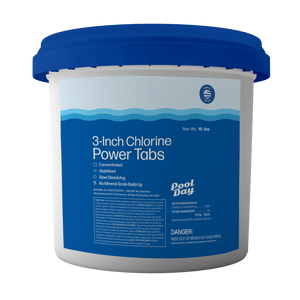
Chlorine tablets (trichlor): The easiest approach for most above ground pool owners. Drop them into a floating dispenser or an inline feeder, and they dissolve slowly, maintaining a consistent chlorine level. Trichlor tablets also contain cyanuric acid, which helps protect chlorine from UV breakdown.
-
Liquid chlorine (sodium hypochlorite): Fast-acting and easy to dose, but it degrades quickly and doesn't contain CYA, so you'll need to manage stabilizer levels separately. Better suited to pools that are already balanced and need a quick boost.
-
Salt chlorine generators: Some above ground pools are compatible with saltwater systems. Salt generators convert dissolved salt into chlorine, reducing the need to handle and store pool chemicals. Not all above ground pool frames and liners are rated for saltwater, so check your manufacturer's specifications before switching.
Filter Maintenance
Your filter type determines your maintenance routine. Most above ground pools use one of three types:
Sand Filters
Sand filters are the most common for above ground pools. Water passes through a bed of filter sand, which traps particles. Over time, the sand gets clogged with debris, restricting flow.
How to maintain:
-
Monitor the pressure gauge. When pressure reads 8–10 psi above the normal operating level (marked when the filter is clean), it's time to backwash.
-
Backwashing reverses the flow of water through the sand to flush out trapped debris. Run it until the sight glass runs clear, usually 2–3 minutes.
-
Replace the filter sand every 3–5 years, or sooner if backwashing no longer restores pressure to normal.
Cartridge Filters
Cartridge filters use a pleated filter element that traps debris as water passes through. They don't require backwashing but need regular cleaning.
How to maintain:
-
Remove and rinse the cartridge with a garden hose every 2–4 weeks, or when pressure rises 8–10 psi above normal.
-
For a deeper clean, soak the cartridge in a filter cleaning solution overnight, then rinse.
-
Replace the cartridge when it no longer cleans up fully, when the pleats are torn, or when it's been in service for 1–2 seasons of regular use.
DE (Diatomaceous Earth) Filters
DE filters offer the finest filtration of the three types, capturing particles as small as 2–5 microns. They require backwashing like sand filters, plus periodic recharging with DE powder.
How to maintain:
-
Backwash when pressure rises 8–10 psi above normal.
-
After backwashing, add fresh DE powder through the skimmer to recharge the filter grids.
-
Disassemble and clean the filter grids fully at least once per season.
Troubleshooting Common Problems
Green Water
Green water means algae, and algae means free chlorine has dropped to near zero. Above ground pools go green faster than in-ground pools because smaller pumps provide less filtration turnover and sun-warmed water is more hospitable to algae.
Fix: Shock the pool to at least 10 ppm free chlorine using a chlorine shock product (such as calcium hypochlorite or liquid chlorine) according to the product label. Brush the walls and floor thoroughly, then run the pump continuously until the water clears—24 hours, not just 8. Once clear, check your CYA level. If it's below 30 ppm, chlorine is burning off too fast in sunlight, and green water will keep coming back.
Cloudy Water
Cloudy water without a green tint usually comes down to one or multiple of three things: not enough filtration time, a dirty or clogged filter, or pH out of range.
Fix: Run the pump for 12+ hours, clean or backwash the filter, and test pH. If pH is above 7.8, chlorine loses effectiveness even when levels test normal. A pool clarifier can help bind fine particles so the filter can capture them more easily.
Foam
Foam on the water surface is usually caused by soap, body lotions, or personal care products entering the water. It can also be caused by overuse of certain algaecides or a low calcium hardness level.
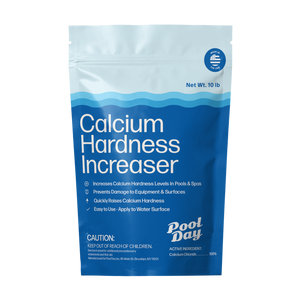
Fix: Encourage swimmers to rinse off before getting in. Check calcium hardness, if it's below 150 ppm, add calcium chloride to bring it up. If foam persists after a chemical adjustment, a partial water change may be the quickest fix.
Waterline Staining
A grey or brown ring at the waterline is typically caused by body oils, sunscreen, and organic debris accumulating over time.
Fix: Use a vinyl-safe tile and liner cleaner applied to a soft sponge or cloth. Don't use abrasive cleaners on vinyl. Regular skimming and brushing prevents buildup from forming in the first place.
Products like Simple Scoop, used alongside your regular sanitizer, help prevent many of these issues before they start by keeping your water chemistry levels balanced and your water clear week to week.
Opening the Pool for the Season
When temperatures consistently reach 70°F or above, it's officially time to open. Remove and clean the cover, reconnect equipment, and refill water to the midpoint of the skimmer. Run the pump, test and balance chemistry, and shock the pool before swimming.
Closing the Pool for the Season
Closing the pool properly is one of the most important things you can do for your above ground pool's long-term health. A poorly closed pool is the most common cause of a difficult spring opening: algae, staining, and equipment damage are all preventable with a proper winterization.
Steps:
-
Balance the water chemistry first. Adjust pH, alkalinity, and chlorine to their ideal ranges before closing. Unbalanced water sitting all winter will damage the liner and corrode fittings.
-
Shock the pool. Raise free chlorine to 10–12 ppm the night before closing to kill any remaining bacteria and algae. Alternatively, a double dose of Simple Scoop acts as both the shock and algaecide and helps protect the water through the off-season. Make sure to run the pump for at least 12 hours after shocking (or according to the shock product's instructions) before covering the pool.
-
Clean the pool thoroughly. Brush, vacuum, and remove all debris. Don't close a dirty pool as anything left in the water will only get worse over winter.
-
Lower the water level. Drop it 4–6 inches below the skimmer opening so ice expansion doesn't damage the skimmer.
-
Drain and disconnect equipment. Remove the pump and filter, drain all water from them, and store indoors. Water left in equipment can freeze and crack housings.
-
Cover the pool. Use a well-fitted, durable winter cover. Secure it tightly to avoid it coming loose in winter weather and letting in debris and light, which encourages algae growth.
What happens if you skip these steps: Water left unbalanced over winter will corrode metal fittings and stain the liner. Pump and filter housings cracked by freezing water are expensive to replace. A pool opened in spring with an algae bloom can take days and significant chemical cost to clear. The closing process takes a few hours; skipping it can cost you significantly more time and money in spring.
Summary and Key Takeaways
Consistent, small maintenance tasks prevent the big, expensive problems. Here's the core rhythm to stick to:
Daily: Run the pump 8–12 hours, skim the surface, check the water level, empty the skimmer basket.
Weekly: Brush and vacuum, test and adjust chemistry, check the pump basket.
Monthly: Test alkalinity, calcium hardness, and CYA with a liquid kit. Clean or backwash the filter.
Seasonal: Open properly when water temperatures hit 70°F+. Close fully before the first freeze — don't cut corners.