Pool Chemical Levels: Your Complete Reference Guide


Bookmark this page. It's the reference guide I wish existed when I first started learning about pool chemistry, one place with every number you need and what happens when things drift outside range.
Chlorine gets most of the attention, and it matters, but it's not the only thing keeping your water clear and safe. pH, Alkalinity, calcium hardness, and cyanuric acid all work together, and a problem in any one of them can undo all your hard work. Balance across the board is what actually keeps a pool in good shape.
Quick Reference Table
|
Parameter |
Ideal Range |
|
pH |
7.2 - 7.6 |
|
Total Alkalinity |
80 - 120 ppm |
|
Free Chlorine |
1 - 3 ppm (lower end if CYA is in range) |
|
Combined Chlorine |
Below 0.5 ppm |
|
Calcium Hardness |
200 - 400 ppm |
|
Cyanuric Acid |
30 - 50 ppm (outdoor pools) |
Each parameter is covered in more depth below, along with why it matters and what to do when it's off.
pH
pH measures how acidic or basic your water is, and it's the parameter that determines how well everything else works. Keep it between 7.2 and 7.6.
Below this, water becomes corrosive. It'll pull calcium out of plaster and grout, corrode metal fittings and heaters, and irritate swimmers' eyes and skin. At the high end, chlorine loses a significant amount of its sanitizing power, even if your test strip shows an adequate chlorine reading. High pH also causes cloudy water and scale on surfaces and equipment.
pH and chlorine are closely linked, since the type of chlorine you use has a real effect on which direction your pH drifts over time. For more on that relationship, see our guide on how chlorine affects pH.
Total Alkalinity
Total Alkalinity measures your water's ability to resist sudden pH changes. The ideal range is between 80 and 120 ppm.
Think of Alkalinity as a buffer. When it's in range, your pH stays stable even after adding chemicals, heavy swimmer load, or rain. When Alkalinity is low, pH will bounce around unpredictably, sometimes swinging with a single dose of chemical or a summer storm. When it's too high, pH becomes difficult to bring down and tends to drift upward on its own, alongside a higher risk of cloudy water and scale.
Alkalinity should always be adjusted before pH, since it's the foundation pH sits on. For more on how the two interact, see our guide on Alkalinity vs. pH.
Free Chlorine and Combined Chlorine
Free chlorine is the active sanitizer in your water, the portion actually available to kill bacteria and algae. Keep it between 1 and 3 ppm for most residential pools, leaning toward the lower end of that range if your cyanuric acid is properly in range, since CYA helps chlorine last longer at lower concentrations. Always refer to your manufacturer’s instructions for more detailed information.
Combined chlorine is different. It's chlorine that has already reacted with contaminants like sweat, oils, and urine, and it's no longer sanitizing anything. This is actually what causes that strong "pool smell" and eye irritation people associate with too much chlorine, when it's really a sign of too much combined chlorine and not enough free chlorine. Keep combined chlorine below 0.5 ppm. If it's climbing above that, it's time to shock the pool, regardless of what your free chlorine reading looks like.
Total chlorine, on the other hand, refers to the sum of both free chlorine and combined chlorine. This means it’s the chlorine you have, regardless of whether it has been spent or not.
Calcium Hardness
Calcium hardness measures the amount of dissolved calcium in your water, and it affects both the water itself and your pool's physical surfaces. Keep it between 200 and 400 ppm for most pools.
-
Plaster and concrete pools: 200–400 ppm, with 250–350 ppm as a comfortable target. These surfaces are calcium-based, so they're the most vulnerable to corrosive water.
-
Vinyl liner pools: 150–250 ppm. Vinyl surfaces don't require calcium for structural protection, but maintaining moderate hardness helps support overall water balance and protect equipment.
-
Fiberglass pools: 150–250 ppm. Fiberglass is less susceptible to calcium-related surface damage than plaster, but maintaining balanced hardness helps support proper water chemistry. Some fiberglass manufacturers recommend keeping calcium hardness toward the lower end of this range to reduce the risk of cosmetic scaling on the gelcoat, so check your owner's manual for any manufacturer-specific recommendations.
When calcium hardness is too low, your water becomes aggressive and will pull calcium out of plaster, grout, and metal equipment to compensate, which erodes those surfaces over time. When it's too high, calcium starts precipitating out of the water as scale, showing up on tile, inside heaters, and on pool walls, and it can also leave water looking cloudy.
Low calcium is corrected by adding calcium chloride gradually. High calcium is more difficult to fix. Partial drain and refill is usually the most practical solution once it's climbed too far out of range.
Cyanuric Acid
Cyanuric acid, often called CYA or stabilizer, protects your chlorine from breaking down in sunlight. Without it, an outdoor pool can lose 75-90% of its free chlorine within a couple of hours on a sunny day. Keep it between 30-50 ppm. For saltwater pools, bump that number to 60-80 ppm.
Too little CYA means you're burning through chlorine constantly and having to dose far more often than you should need to. But too much CYA is just as much of a problem, even though it gets less attention. As CYA climbs, it takes progressively more free chlorine to deliver the same sanitizing power, a phenomenon known as chlorine lock. At high CYA levels, your chlorine reading can look fine on paper while barely doing anything in practice.
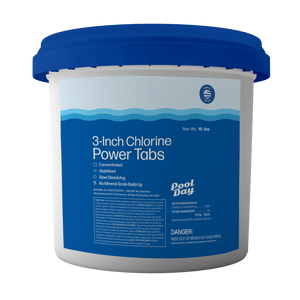
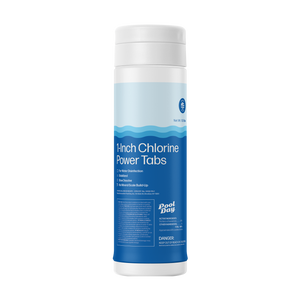
The tricky part about CYA is that it doesn't break down on its own, it only becomes diluted. If you've been running chlorine tablets for a while without ever draining part of the pool, it's worth testing your CYA specifically, since tablets and Dichlor both add it with every single dose. The only real fix for high CYA is a partial drain and refill.
How Often Should You Test?
Weekly testing is a reasonable baseline for pH, Alkalinity, and free chlorine during swim season. This gives you enough visibility to catch problems early without turning testing into a chore you'll eventually skip.
Calcium hardness and cyanuric acid change slowly and can be tested monthly, unless you've recently added a lot of fresh water, which is a good time to retest both.
Beyond the routine schedule, test more often after anything that changes your water meaningfully: heavy rain, a pool party or unusually high swimmer load, extended heat waves, or right before opening and closing your pool for the season.
Summary
Balanced pool chemistry comes down to keeping five numbers in range at the same time: pH, Total Alkalinity, free chlorine, calcium hardness, and cyanuric acid. They all interact with each other, so getting one wrong tends to throw the others off too, which is why testing consistently across all of them matters more than obsessing over any single number.
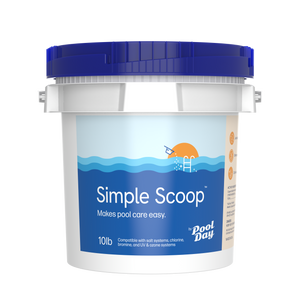
If you're looking for an easier way to stay on top of your routine, Simple Scoop is designed to work with your existing chemistry rather than against it. It’s a powerful oxidizer that helps keep your water balanced with a simple weekly dose.