Does Chlorine Affect pH? How Different Chlorine Types Change Your Pool's pH


Yes, chlorine affects pH. But here's the part most articles skip: the direction depends entirely on which type of chlorine you're using. Some chlorine products lower pH, some raise it, and some have surprisingly little overall effect. The key is knowing which one you're using.
I get why this trips people up. If you Google this question, you'll usually get one flat answer: "chlorine lowers pH." That's true for some products, but definitely not all. This can get confusing, so I’ll help walk you through the different types of chlorine and what they actually do to your pH.
Why the Answer Isn't Straightforward
The thing is, "chlorine" isn't one chemical. It's a category, and the products in it are chemically pretty different from each other. Trichlor (tablets), Calcium Hypochlorite (Cal Hypo Shock), Sodium Hypochlorite (liquid chlorine bleach), and Dichlor (Dichlor powder) all deliver chlorine to your pool, but they carry different pH levels and different byproducts along with them.
It gets even more confusing because the pH of the chlorine product itself isn't always the same as its long-term effect on your pool water after the chlorine gets used up.
How Different Types of Chlorine Affect pH
Trichlor
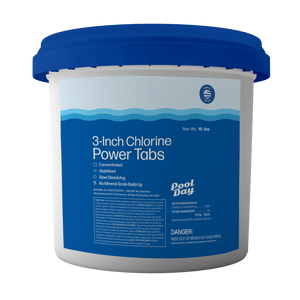
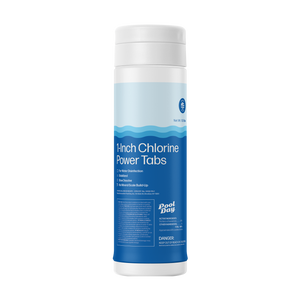
Trichlor is what's in most chlorine tablets and pucks, the kind you'd put in a floating feeder, tablet dispenser, or directly into your skimmer. Trichlor has a low pH on its own, and it steadily pulls your pool's pH and Alkalinity down over time.
If you're using Trichlor as your main source of chlorine, this is a slow drift, not a sudden crash. But it adds up. Most people running a tablet feeder don't realize their chlorine source is the reason they're buying so much pH increaser.
Calcium Hypochlorite (often referred to as Cal Hypo)
Cal Hypo is a granular chlorine shock with a high pH, and it raises your pool's pH when you add it. It's a common choice for shocking because it dissolves fast and delivers a strong dose of chlorine quickly.
The pH bump from Cal Hypo is usually temporary and modest with normal use, but if you're shocking regularly, it can nudge your pH upward over time, especially in pools that don't have a lot of buffering capacity to begin with.
Sodium Hypochlorite (Liquid Chlorine)
Liquid chlorine has the highest pH of any common chlorine product, around 13. It seems like it should send your pool's pH through the roof, and people assume it does. In practice, it has a smaller net effect than you'd expect. Liquid chlorine causes an immediate pH rise when you add it, but much of that effect gets offset as the chlorine does its job.
Here's why: liquid chlorine is basic right out of the jug, so it spikes your pH a bit when you first add it. But as that chlorine breaks down and goes to work, it leaves behind a slightly acidic byproduct that cancels most of that spike back out. The trade isn't perfect though, so liquid chlorine pools still tend to creep upward in pH over time and need occasional adjustment.
Dichlor
Dichlor's pH sits close to neutral, so it has the smallest effect on your pool's pH of any of these. It's fast dissolving and commonly used for shock treatments or in spas. If you're using Dichlor, pH management is generally low on your list of water chemistry concerns, though you'll want to keep an eye on your cyanuric acid (CYA) levels because Dichlor adds CYA to your water just like Trichlor does.
A Note on Saltwater Pools
If you have a saltwater pool, you'll notice your pH drift upward over time too. That's because your salt cell produces high pH byproducts like sodium hydroxide as it generates chlorine. So even though you're not adding chlorine manually but from a salt cell, your pH still needs regular attention.
|
Chlorine Type |
pH of Product |
Effect on Pool pH |
|
Trichlor |
Low (~3) |
Lowers pH (and lowers Alkalinity) gradually |
|
Calcium Hypochlorite |
High (~12) |
Raises pH quickly and repeated use over time further increases pH |
|
Sodium Hypochlorite |
Very high (~13) |
Raises pH initially but temporarily, then pH returns close to prior level |
|
Dichlor |
Near neutral (~6-7) |
Minimal effect on pH |
Does Shocking a Pool Raise or Lower pH?
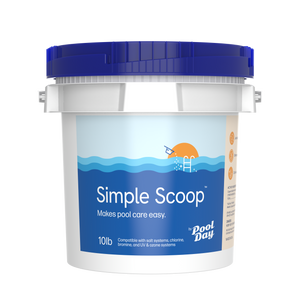
It depends on what you're shocking with. Cal Hypo shock will raise your pH a bit, Dichlor shock barely moves it, and non-chlorine shock (potassium monopersulfate, the main ingredient in Simple Scoop) typically has little to minimal effect on pH since it isn't a chlorine product.
The most common pH problem I see after shocking isn't really about the shock itself. It's people shocking with Cal Hypo, then immediately adding more chemicals before the water's had a chance to settle. Give it a few hours, retest, and you'll get a much clearer picture of where you actually stand. If you shocked with Cal Hypo, I'd test the following morning before doing anything else.
What This Means for Managing Your Pool
Once you know what's in your chlorine, your pH swings start making a lot more sense.
Running tablets in a feeder? Expect your pH and Alkalinity to drift down gradually, and plan to periodically add pH increaser.
Shocking with Cal Hypo? Expect an increase and test before adjusting anything else.
Using liquid chlorine as your main sanitizer? Keep an eye on your pH over the weeks, not just after a single dose.
How Often Should You Test pH?
Test after dosing anything new, after a heavy rain, after a pool party or heavy swim weekend, and at the start and end of your season. If you're running Trichlor tabs or shocking regularly, weekly testing is also worth the two minutes it takes.
Testing regularly is the simplest way to stay ahead of pH problems instead of chasing them after the fact.
How Do I Use Less Chlorine?
If you want to use less chlorine in your pool, I recommend trying out a non-chlorine oxidizing shock like Simple Scoop. It’s not a replacement for chlorine, but customers use up to 30% less chlorine because it lasts longer. Simple Scoop oxidizes contaminants that chlorine would otherwise have to take care of. Use it as weekly maintenance to prevent algae, protect your water’s balance, and keep your chlorine lasting longer.