Bromine vs Chlorine: Which One Is Right for Your Pool or Spa?


Article TLDR:
-
Bromine and chlorine sanitize water the same basic way, but they behave differently as they break down, and that's the root of almost every practical difference between them.
-
Chlorine is the better choice for most outdoor pools: cheaper, more stable in sunlight, easy to find.
-
Bromine is the better choice for most hot tubs, spas, and cold plunges: more stable at high temperatures (or, for cold plunges, over time in low-turnover water), gentler on skin and eyes, and easier on respiratory sensitivities.
-
Never mix bromine and chlorine together.
If you've got a pool, hot tub, or cold plunge and you're trying to decide between bromine and chlorine, this guide will get you there. You’ll learn what's actually different between them, how they perform in various situations, and get a clear recommendation for your specific setup.
What Are Chlorine And Bromine?
Is bromine the same as chlorine? No, but they're close relatives. Both are halogens (the same chemical family as fluorine and iodine), and both work as sanitizers, algaecides, and oxidizers in water. Practically speaking, they do the same job: kill bacteria and break down contaminants so your water stays safe and clear.
The active sanitizing form of chlorine in pools and spas is hypochlorous acid. Different chlorine products such as tablets, granules, and liquid chlorine contain different chemical compounds, but they all produce hypochlorous acid once added to the water.
“Bromine" for pools and spas isn’t true elemental bromine, it is just used to describe any chemical that releases hypobromous acid into the water. Bromine is most commonly sold as tablets, but it is also available in granule and liquid formulations.
What’s The Actual Difference?
Here's where the real difference comes in: what happens to each sanitizer after it does its job.
When chlorine reacts with contaminants, it forms compounds called chloramines. Chloramines are far weaker sanitizers than free chlorine, so as they build up, your water becomes less effectively protected and needs fresh chlorine added to compensate. Chloramines are also the source of that strong "pool smell" most people associate with chlorine (ironically, that smell usually means your chlorine level is too low, not too high, since free chlorine has almost no odor).
Bromine goes through a similar process, but its waste product, bromamine, stays reactive and keeps working even after it forms. That's the biggest reason bromine is often perceived as gentler and maintains its sanitizing ability longer between treatments, and it's the root cause of almost every difference covered below.
Bromine |
Chlorine |
|
|
Best for |
Hot tubs, spas, cold plunges |
Outdoor pools |
|
High Temperature Performance |
Stays effective |
Burns off faster |
|
pH range |
Wider, more forgiving |
Narrower, needs closer monitoring |
|
Odor |
Mild |
Stronger, especially when depleted |
|
Skin/eye irritation |
Lower |
Higher |
|
Sunlight/UV stability |
Breaks down quickly |
Stable (especially stabilized chlorine) |
|
Maintenance effort |
Lower, byproduct stays active |
Higher, needs more frequent shocking |
|
Cost |
~$20-22/lb. on average |
~$5-7/lb. on average |
How They Compare
- Effectiveness at temperature: Chlorine breaks down faster as water heats up, which is why it's not the go-to for hot tubs running 100-104°F. Bromine stays stable at higher temps, and it also holds up well in the low-turnover conditions of a cold plunge.
- pH range: Chlorine needs a tighter window (7.2-7.6) to stay effective, while bromine tolerates a wider range without losing as much sanitizing power, one reason it feels lower-maintenance day to day.
- Skin, eyes, and odor: Chloramine (chlorine's waste byproduct) is genuinely irritating while bromamine, bromine's equivalent byproduct, is milder on skin, eyes, and breathing. This is why bromine is often the better call for anyone with asthma or another respiratory sensitivity, especially indoors where vapor has nowhere to go.
- Sunlight and UV: Stabilized chlorine holds up fine indoors and outdoors, but bromine breaks down quickly under direct sun, which is why it's mostly used in covered spas rather than pools sitting in full sun all day.
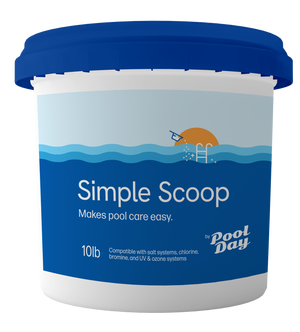
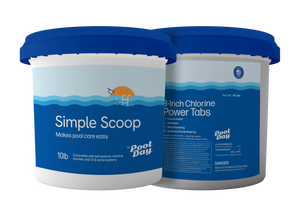
- Maintenance effort: Bromamine stays active instead of going fully inert, so bromine needs less frequent shocking. Chlorine needs more consistent dosing and shocking, especially in heat and sun, though an all-in-one product like Simple Scoop can help simplify that routine.
- Cost: Bromine costs more, but the gap is minor at hot tub volumes (a few dollars on a 2 lb. bottle) and significant at pool volumes, one more reason chlorine is the practical default for pools.
Which Should You Use?
Key takeaway:
People ask me this more than almost anything else: "just tell me which one to buy." Fine. Outdoor pool, use chlorine. Hot tub, spa, or cold plunge, use bromine. Read on for the exceptions, but that's the answer 90% of you came here for.
Outdoor pool: Chlorine. Cheaper, holds up in sunlight, and the practical choice at pool volume.
Indoor pool: Chlorine still works, since UV degradation isn't a factor, but ventilation matters more. Chloramine buildup is worse in enclosed spaces, so good airflow and regular shocking count for more.
Hot tub or spa: Bromine. It holds up better at high temperatures, tolerates a wider pH range, and is gentler on skin, helpful given how much prolonged contact hot tub users have with the water.
Cold plunge: Bromine. Low water volume and frequent use relative to that volume make bromine's gentler byproduct and lower upkeep the better fit.
Sensitive skin or respiratory concerns: Bromine, especially indoors or in enclosed spaces where chloramine vapor lingers.
Budget priority: Chlorine. Less expensive at every scale, and the gap widens with size.
Can You Mix Bromine and Chlorine?
No. Don't use bromine and chlorine in the same pool or spa at the same time.
Mixing the two doesn't make your water "double sanitized." Combining them can trigger unpredictable chemical reactions, throw off your water balance in ways that are hard to correct, and in some cases create a more hazardous mix than either chemical on its own. It's not a question of using "a little of both"; the two simply aren't designed to be in the water together.
Switching from one to the other: If you're moving from chlorine to bromine (or vice versa), drain the existing water first. For a hot tub or spa, this usually means a full drain and refill, since there's not enough water volume to safely dilute the switch otherwise. For a pool, if a full drain isn't practical, stop adding the old sanitizer, let levels drop as close to zero as you can (testing to confirm), and only then begin introducing the new one. Going in with a fresh fill is the cleanest, safest way to make the switch either way.
Bottom Line
If you've got an outdoor pool, I'd go with chlorine. It's cheaper, it's stable in sunlight, and at pool-sized volumes, that cost difference adds up fast. If you've got a hot tub, spa, or cold plunge, I'd reach for bromine instead: it holds up at higher temperatures, tolerates a wider pH range, and is gentler on the skin and eyes of the people sitting in close, repeated contact with that water.
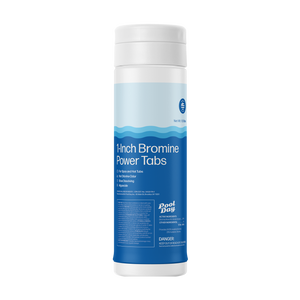
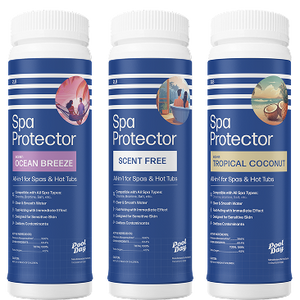
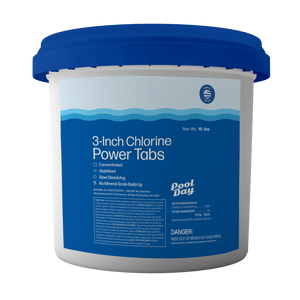
Whichever one fits your setup, the day-to-day maintenance gets a lot easier with the right products on hand. For pools, Simple Scoop and 3-inch chlorine tabs cover sanitizing and shock in a simple routine. For hot tubs and spas, Spa Protector and 1-inch bromine tabs (if you do go the chlorine route for a spa) round out what you need to keep things balanced.