Algae in Your Pool: Types, Causes and How to Prevent It


You go out to check on your pool one morning and the water has turned green overnight. Or you notice a dusty yellow film along the walls that keeps coming back no matter how much you brush it. Both are algae problems, and they're more common than most pool owners expect.
I've seen pools go from crystal clear to full bloom in 24 to 48 hours when the conditions are right. It happens faster than people think, and once it's established, getting rid of it takes a lot more effort than preventing it in the first place. This guide covers what algae is, how to identify the different types, what causes it, and how to prevent and treat it.
What Is Pool Algae?
Algae are microscopic plant-like organisms that are almost always present in outdoor pools in small amounts. In a well-maintained pool, your chlorine keeps them in check. The problem starts when something throws your water chemistry off, your chlorine drops, circulation slows down, or a heavy rainstorm dilutes everything, and algae gets the conditions it needs to multiply fast.
Beyond looking unpleasant, an algae bloom creates real water chemistry problems. Algae consumes chlorine rapidly, which means your sanitizer gets depleted even faster once a bloom takes hold. That drop in chlorine creates an opening for bacteria and other contaminants to take hold too, which is why an algae problem is always a water safety issue, not just a cosmetic one.
Types of Pool Algae and How to Identify Them
Not all pool algae looks the same or behaves the same way. Knowing which type you're dealing with matters because they respond differently to treatment.
Green Algae
Green algae is by far the most common type and the one most people picture when they think of a dirty pool. It can turn your water cloudy and green, coat the walls and floor with a slippery film, or both. It tends to show up first in corners and shaded areas where circulation is weakest.
The good news is that green algae is the easiest type to treat. It's not chlorine resistant and responds well to a standard shock treatment followed by brushing and filtration.
Yellow Algae (Mustard Algae)
Yellow algae, also called mustard algae, looks like pollen or sand that's settled on your walls or floor. It's usually a dusty yellowish-brown color and tends to sit in shaded spots, often along the sides of the pool. The key difference from green algae: when you brush it off, it comes right back. That's how you know you're dealing with mustard algae rather than just debris.
Mustard algae is chlorine resistant, which makes it harder to clear than green algae. Standard shock doses usually aren't enough on their own. It typically requires a higher chlorine dose and an algaecide that's specifically formulated to target it.
Black Algae
Black algae looks like dark spots or patches embedded into the pool surface, most commonly on plaster or concrete pools. It's not just sitting on the surface like green or yellow algae. It roots itself into the surface and forms a protective outer layer that shields it from chlorine.
Black algae is the hardest type to treat by a significant margin. The protective layer means you have to physically break through it with a stiff brush before any chemical treatment can work, and even then it can take multiple rounds to fully clear. If you have black algae, be thorough and patient.
A Note on Pink Algae
You may have heard the term "pink algae", but it's worth noting that it's not actually algae at all. It's a bacteria that shows up as a pink or reddish slime, usually around fittings, ladders, and skimmers. It's resistant to normal chlorine levels and doesn't respond to standard algaecide. If you're seeing pink slime in your pool, it needs to be treated as a serious bacterial issue that can cause illness.
What Causes Algae in Pools?
Algae problems almost always trace back to one or more of the same causes: low chlorine, poor circulation, imbalanced water chemistry, or some combination of the three.
Low chlorine is the most common trigger. When your free chlorine drops below 1 ppm, algae has the opening it needs to start taking hold. That dip can happen quickly, especially in summer when UV breaks down chlorine faster and swimmer load increases. A single missed treatment during peak season is sometimes all it takes.
Poor circulation is a close second. If your pump isn't running long enough, or if you have dead zones in the pool where water sits still, algae will find those spots first. Corners, steps, and areas behind ladders are the usual starting points.
In the summer, aim for at least 8 to 10 hours of pump run time per day as a baseline. A good rule of thumb is one hour for every 10 degrees of air temperature, so on a 90 degree day, that's 9 hours minimum. On the hottest days or after heavy use, running it closer to 12 hours is worth it. w
Imbalanced pH matters more than people realize. When your pH drifts too high, your chlorine becomes significantly less effective at actually sanitizing, even if your chlorine level looks fine on a test strip. High pH and adequate chlorine on paper doesn't always mean adequate protection in practice.
Heavy rain is another underrated factor. A big storm can dilute your chemicals, introduce phosphates and organic debris, and drop your sanitizer levels all at once, creating near-ideal conditions for algae.
In my experience, most residential algae blooms come down to inconsistent maintenance. It's not usually one dramatic failure, it's a few days of low chlorine combined with reduced pump run time that tips the balance.
How to Prevent Algae in Your Pool
Prevention is genuinely much easier than treatment. These are the habits that keep algae from getting a foothold.
Maintain the Right Chlorine Levels
Keep free chlorine between 1ppm or higher consistently. Test at least twice a week during summer and adjust as needed. After heavy rain or a busy swim weekend, test and treat before the next swim session, not after.
Keep Water Chemistry Balanced
pH between 7.2 and 7.6 is the range where your chlorine works properly. Outside that range, especially on the high end, your sanitizer loses effectiveness fast. Alkalinity between 80 and 120 ppm helps your pH stay stable. Test your full chemistry weekly during swim season.
Run Your Filter and Pump Long Enough
A good rule of thumb is to run your pump long enough to turn the full volume of your pool over at least once a day. For most residential pools that's 8 hours or more in summer. Consistent circulation is one of the most underrated parts of algae prevention because it eliminates the stagnant spots where algae starts.
Brush the Pool Regularly
Brush your walls, steps, and floor at least once a week, even when the pool looks clean. Algae starts as a thin film before it's visible, and regular brushing disrupts that before it can establish.
Use a Preventative Oxidizer
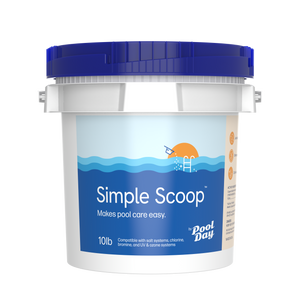
Running a weekly non-chlorine oxidizer like Simple Scoop helps keep organic contaminants from building up in your water, which removes one of the main things algae feeds on. It also takes pressure off your chlorine so it can focus on sanitizing rather than fighting through a buildup of oils, debris, and other waste.
How to Treat Algae if It's Already There
Treating Green Algae
Green algae is the most straightforward to treat, but it still needs to be done in the right order.
Balance your water chemistry. Test and adjust pH to 7.2 to 7.6 and Alkalinity to 80 to 120 ppm before adding anything. High pH significantly reduces how effective your chlorine is, and this is one of the most commonly skipped steps when shock treatments underperform.
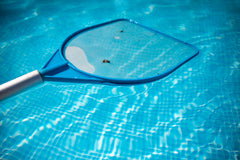
Brush thoroughly and skim. Use a skimmer net to clear floating debris, then scrub the walls, floor, steps, and behind ladders. This breaks the algae's protective barrier so the chlorine can penetrate it. Use a stainless steel brush for concrete or gunite pools, and a nylon brush for vinyl or fiberglass.
Clean your filter. Before adding any chemicals, backwash your sand or DE filter, or rinse your cartridge. Starting with a clean filter means it can actually do its job once treatment begins.
Shock the pool. The dose depends on how green your water is. See the image below for color reference.

-
Light green or teal: triple dose (3 lbs per 10,000 gallons)
-
Very dark: quadruple dose (4 lbs per 10,000 gallons)
Broadcast the shock around the perimeter with the pump running. Do this at dusk (or at night) so sunlight doesn't break down the chlorine before it can do its job.
Run the filter and keep an eye on pressure. Keep the pump running continuously for at least 24 hours. Check your filter pressure regularly and backwash or rinse the cartridge whenever pressure rises. A clogged filter won't clear the water no matter how long you run it.
Vacuum to waste. Once dead algae settles on the bottom, vacuum it out with your filter valve set to waste so it exits the system entirely rather than cycling back through.
Clean the filter one final time. Give it a thorough backwash or rinse once the water has cleared to remove any remaining dead algae before returning to normal operation.
Test and rebalance. Check your levels once the water clears and adjust as needed before swimming.
Treating Yellow Algae (Mustard Algae)
Yellow algae needs a more methodical approach than green algae because it's chlorine resistant and stubborn enough to reintroduce itself from surfaces outside the pool. Follow these steps in order.
Balance your water chemistry. Test and bring pH to 7.2 to 7.6 and Alkalinity to 80 to 120 ppm before adding anything. Note: if you're using a mustard-specific algaecide, check the product instructions first as some require pH to be raised to 7.8 or higher before application.
Decontaminate everything. Wash swimsuits and soak pool accessories, nets, and brushes in a 10:1 water-to-bleach solution before you do anything else. This is the most commonly skipped step and the main reason mustard algae comes right back after treatment.
Clean your filter. Backwash your sand or DE filter, or rinse your cartridge, before you start. Algae trapped in the filter will recontaminate the water throughout treatment if you don't clear it first.
Brush thoroughly. Scrub every inch of the pool, including walls, floor, steps, and corners. Mustard algae clings tightly to surfaces and brushing exposes it to the chemicals you're about to add.
Add a mustard-specific algaecide. Standard algaecide won't cut through the chlorine resistance. For a regular chlorine pool, look for a chelated copper algaecide at 7% concentration or higher. Chelated copper is formulated to handle mustard algae and is less likely to stain than standard copper sulfate. Sodium bromide-based products also work well for an active bloom, but note that the EPA has restricted their use in outdoor pools, and they are not suitable for saltwater, ozone, or UV systems.
For saltwater, ozone, or UV pools, use a polyquat algaecide instead. Look for polyquat 60 on the label and apply at a double dose for an active bloom. Polyquat is fully compatible with all pool systems and carries none of the staining or salt cell damage risk that copper products can cause in saltwater pools.
Whichever product you use, broadcast it across the pool according to the package directions, then wait 24 hours before shocking. Adding shock and algaecide at the same time cancels both out.
Quadruple shock the pool. A quadruple dose means 4 lbs per 10,000 gallons. Follow the algaecide with a triple dose of Cal Hypo or Dichlor shock. Run your pump for at least 24 hours. Do this at night for best results.
Vacuum to waste. Vacuum any dead algae that settles on the bottom with your filter valve set to waste so it doesn't cycle back through.
Clean the filter again. Backwash or rinse the filter once everything has cleared to remove any remaining dead algae.
Test and rebalance. Check your levels before swimming and adjust as needed.
Expect to repeat the full treatment. Yellow algae is persistent and often takes more than one round to fully clear.
Treating Black Algae
Black algae is in a category of its own. It roots into porous surfaces like plaster and gunite and forms a protective outer layer that shields it from chlorine, which means a standard shock treatment won't touch it. This takes more effort and more than one round.
Balance your water chemistry. Test and bring pH to 7.2 to 7.6 and Alkalinity to 80 to 120 ppm before adding anything. Out-of-range water makes every treatment step less effective.
Clean your filter. Backwash your sand or DE filter, or rinse or replace your cartridge. If your filter has spores in it, you'll just be cycling them back into the water throughout treatment.
Brush thoroughly (and hard!). Use a stainless steel brush for plaster or concrete, nylon for vinyl or fiberglass. You're not trying to scrub it off the wall — you're trying to crack the outer coating so chemicals have a path to the living cells underneath. Focus on corners, steps, and shaded areas.
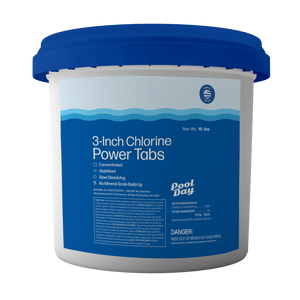
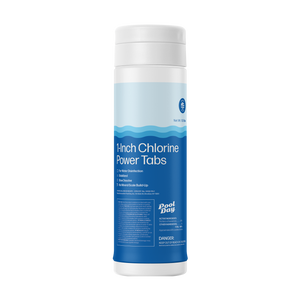
Apply a chlorine tablet directly to the spots. Once brushed, rub a 3-inch chlorine tablet directly on the affected area. Use a gloved hand or wedge a piece of tablet against each spot, and keep it there for 30-60 seconds per spot to deliver a concentrated dose of chlorine. Do this before shocking, so the tablet primes each spot and the subsequent shock can take care of the rest of the pool.
Add a black algae-specific algaecide. Standard algaecide isn't formulated to cut through the protective layer. Look for a product with a high copper sulfate concentration, typically 10% or higher. That copper concentration is what gives it the penetrating power to get through the outer layer after brushing. Apply it according to package instructions, then wait 24 hours before shocking.
Quad shock the pool. Add 4 lbs of Cal Hypo shock per 10,000 gallons. Shock at night and run the filter continuously for at least 24 hours afterward. Check filter pressure regularly and backwash or rinse the cartridge whenever it rises.
Brush again and vacuum to waste. After the shock has settled, brush the pool again, then vacuum any dead algae to waste so it exits the system entirely.
Clean the filter one final time. Give it a thorough backwash or rinse once the water clears.
Test and rebalance. Check your levels before swimming and adjust as needed.
If black algae keeps returning to the same spots after multiple full treatment rounds, the surface itself may have degraded enough that it keeps providing a foothold. At that point, resurfacing or regrouting is the actual fix, not more treatment.
Can You Swim in a Pool With Algae?
No. You should not swim in a pool with an active algae bloom.
The reason isn't the algae itself, it's what the algae means for your water chemistry. When algae is present, it's consuming your chlorine rapidly, which means your sanitizer level is likely too low to keep the water safe. Bacteria can establish itself in under-sanitized water quickly, and that's the actual risk.
There's also a practical safety concern: algae makes surfaces slippery, especially steps and the pool floor.
Wait until the water has fully cleared, your chlorine has returned to a normal range, and you've tested and confirmed your chemistry is balanced before getting back in.
Keep Algae Out of Your Pool for Good
Algae is almost entirely preventable with consistent habits. Keep your chlorine in range, test your chemistry regularly, run your pump long enough, and brush the pool weekly. After rain or heavy use, test before the next swim session rather than after.
If you do end up with algae, the fix is straightforward as long as you follow the sequence: balance first, then shock, then brush, then filter. Skipping steps is what turns a one-day fix into a week-long problem.
Simple Scoop is a powerful oxidizer and algaecide that prevents algae of all kinds from appearing. It’s designed to take the pressure off your chlorine week to week, keeping organic buildup down and helping your sanitizer last longer. It's not a replacement for chlorine, but used as weekly maintenance, it's one of the more effective things you can do to keep your water from drifting toward conditions that let algae get started.