Green Hot Tub Water: Causes and How to Fix It


Article TLDR:
-
Green hot tub water is most commonly caused by algae, oxidized metals (especially copper), or organic/biofilm buildup.
-
Diagnose first. Slimy walls = algae. Clear green water with no slime = copper/metals. Water that won't clear despite correct chemistry = likely biofilm.
-
If your water suddenly turned clear green after shocking or adding sanitizer, oxidized copper or other metals are a likely cause.
-
Don't treat for algae if it's a copper problem — shocking will make the discoloration worse.
-
Green hot tub water should not be used until the cause is identified and treated.
Green hot tub water is most commonly caused by one of three things: algae, oxidized metals (most often copper), or biofilm in the plumbing. The fix is straightforward once you know which one you're dealing with but treating for the wrong cause wastes time and can make things worse. This guide helps you diagnose which problem you have and tells you exactly what to do about it.
Why Hot Tub Water Turns Green
Algae
Algae is less common in hot tubs than in pools — the high water temperature and smaller volume mean sanitizer levels matter a lot, and algae can establish quickly when they drop. It's most likely if the cover has been left off for an extended period, the tub hasn't been used in a while, or sanitizer has been neglected.
Signs: Green or greenish-yellow water with a slimy feel on the walls and floor. Often accompanied by a musty or earthy smell.
Copper and Metal Oxidation
This is a common cause of green hot tub water, and it's one that catches people off guard — particularly because it often appears right after you've done something right, like shocking the tub or adding fresh sanitizer.
Copper and other metals enter the water from source water (especially in areas with older plumbing), from corroded fittings and heater elements, or from algaecides that contain copper. When you add shock or another strong oxidizer, dissolved copper can oxidize and form colored compounds that give the water a green or blue-green tint.
Signs: Water that turns green suddenly, especially after shocking or adding sanitizer. Water that appears green but is clear (not murky), with no slime on surfaces, no smell.
Key takeaway: If your hot tub suddenly turned clear green right after you shocked it or added bromine or chlorine, you shouldn’t immediately add more sanitizer. Oxidized copper or other metals are a likely cause, so test for metals before treating the water as an algae problem.
Biofilm and Plumbing Buildup
Biofilm is a layer of bacteria and organic material that builds up inside the plumbing jets and pipes of a hot tub over time. It's not visible from the outside and doesn't look like algae. When it breaks loose — often after a period of heavy use, a chemical addition, or a change in water temperature — it can cloud and discolor the water.
Signs: Water that won't clear despite balanced chemistry and proper sanitizer levels. Sometimes accompanied by foam or an odor that appears suddenly.
How to Diagnose Which Cause You Have
|
Symptom |
Most Likely Cause |
|
Slimy walls and floor, murky green water |
Algae |
|
Clear green water, no slime, no smell |
Copper/metals |
|
Water turned green right after shocking |
Copper/metals |
|
Green and foamy |
Biofilm or organic contamination |
|
Won't clear despite correct chemistry |
Biofilm |
|
Green water with strong smell |
Algae or biofilm |
If you're not sure whether it's copper, a water test kit that includes a metals test, or a quick test at a local pool supply shop, will confirm it. Most standard test strips don't test for copper; you'll need a dedicated metals test.
Is Green Hot Tub Water Safe to Use?
No, don't use the hot tub until the cause is identified and treated!
-
Algae: water with active algae growth is unsanitary and potentially harmful, particularly in warm water.
-
Copper/metals: elevated copper can discolor hair, especially light-colored or chemically treated hair, and may stain spa surfaces. If the water is unexpectedly green, avoid soaking in the tub until you've tested the water and confirmed sanitizer, pH, and metal levels are acceptable.
-
Biofilm: biofilm can harbor bacteria including Legionella. Don't use the tub.
How to Fix Algae in a Hot Tub
-
Shock the water with a chlorine-based sanitizer according to the product label for treating algae or heavily contaminated spa water. Maintain the recommended sanitizer level throughout treatment.
-
Scrub the walls and floor with a soft brush to dislodge algae from surfaces.
-
Clean or replace the filter. Algae clogs filters quickly — a saturated filter won't clear the water no matter how much chemical you add.
-
Run the jets to circulate the treated water fully.
-
Retest according to the shock product's instructions. If the water is clearing, maintain the recommended sanitizer level and continue circulation. If it remains green or sanitizer demand stays unusually high, follow the product's retreatment instructions or drain and refill.
-
Drain and refill if the water doesn't clear after two shock treatments, or if algae has established heavily on surfaces.
Prevent recurrence: keep the cover on when the tub isn't in use, maintain consistent sanitizer levels, and test weekly.
How to Fix Copper and Metal Discoloration
Do not shock the water again until metals are treated — more oxidizer will make the green color worse.
-
Use a metal sequestrant to bind the copper and prevent it from oxidizing further. A metal sequestrant (often sold as a stain and scale inhibitor) doesn't remove copper from the water. It binds with dissolved metals to help keep them soluble and reduce staining and discoloration.
-
Run the filter continuously for 24–48 hours after adding the sequestrant.
-
Test copper levels after 48 hours. If copper levels remain high, a partial or complete drain and refill with lower-metal source water may be needed to significantly reduce the concentration.
-
Identify the source. If your fill water is high in copper, use a hose filter when refilling. If the source is a corroded heater element or fittings, those will need to be inspected and replaced.
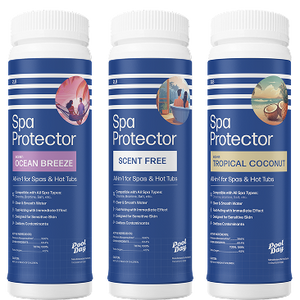
Spa Protector includes stain and scale inhibitors as part of its weekly formula, which helps prevent copper and mineral buildup before it causes discoloration. Used weekly, it helps keep minerals controlled and reduces the risk of staining, scale, and discoloration.
How to Fix Biofilm and Plumbing Buildup
Established biofilm often requires more than routine sanitizer or shock because it can build up inside plumbing and jets where normal water treatment may not fully remove it.
-
Use a hot tub pipe cleanser (also called a plumbing purge or line flush product) before draining. Add it to the water and run the jets for the specified time as this dislodges biofilm from the plumbing.
-
Drain the tub completely.
-
Wipe down all surfaces including the shell, jets, and any accessible fittings.
-
Rinse the tub thoroughly before refilling.
-
Clean or replace the filter.
-
Refill and rebalance water chemistry before using.
How to Prevent Green Hot Tub Water
-
Test weekly and maintain sanitizer levels. Consistent sanitizer levels and balanced water chemistry help prevent algae and reduce conditions that can contribute to corrosion and metal-related discoloration.
-
Keep the cover on when the tub isn't in use. UV light and airborne debris accelerate algae growth and chemical breakdown.
-
If your source water contains metals, consider a hose filter designed to reduce copper and other metals when filling or topping off the spa. This is especially important if you're on older plumbing or in an area with hard or mineral-rich water.
-
Add Spa Protector weekly. It includes a clarifier, non-chlorine oxidizing shock, and stain and scale inhibitors in one dose. Regular use prevents the mineral buildup that leads to copper discoloration and keeps the water balanced between sanitizer additions.
-
Drain and refill on a regular schedule. Most hot tubs should be fully drained every 3–4 months. Dissolved solids, copper, and other contaminants build up over time and can't be fully managed with chemicals alone.
Summary and Key Takeaways
-
Diagnose before treating: slimy green water = algae; clear green water or green after shocking = copper; won't clear despite good chemistry = biofilm.
-
Each cause has a different fix — treating for algae when the problem is copper makes things worse.
-
Green hot tub water is not safe to use until the issue is resolved.
-
For copper: use a metal sequestrant and avoid adding more shock until metals are under control.
-
For algae: shock, scrub, clean the filter, and drain if it doesn't clear.
-
For biofilm: pipe cleanse and full drain and refill.
-
Spa Protector used weekly helps maintain balanced water, control minerals, and reduce the risk of staining, scale, and cloudy or discolored water.